Narrative development and copy editing for Art Fund and Nesta
Art Fund and Nesta joined forces to run an initiative called Mini Wonders, which supported struggling families in museum settings. Otherwise was brought in to develop the key messaging, which needed to be accessible for people with English as a second language.
Things worked on
Narrative development: creating clear, accessible messaging that positioned the initiative in an inviting way
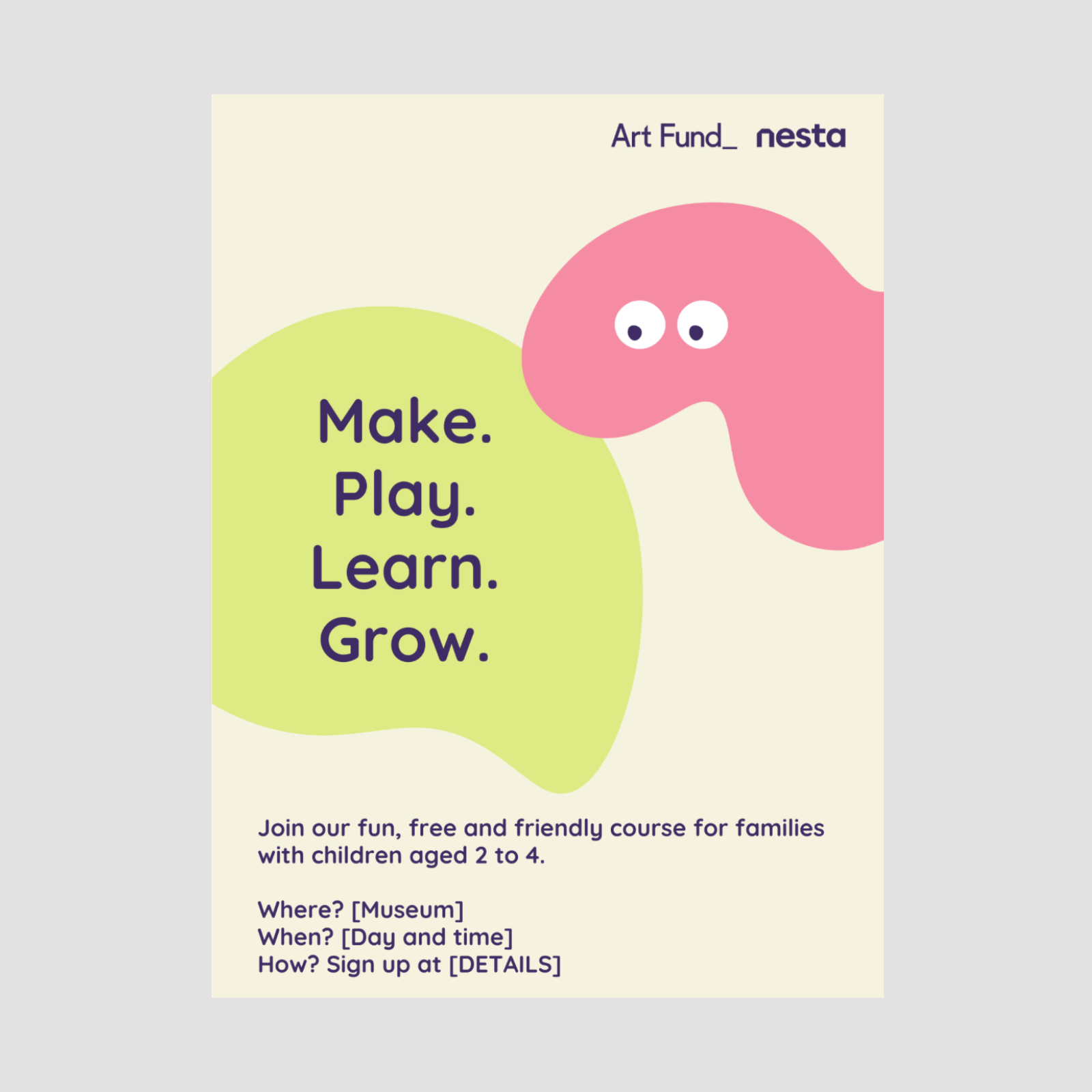
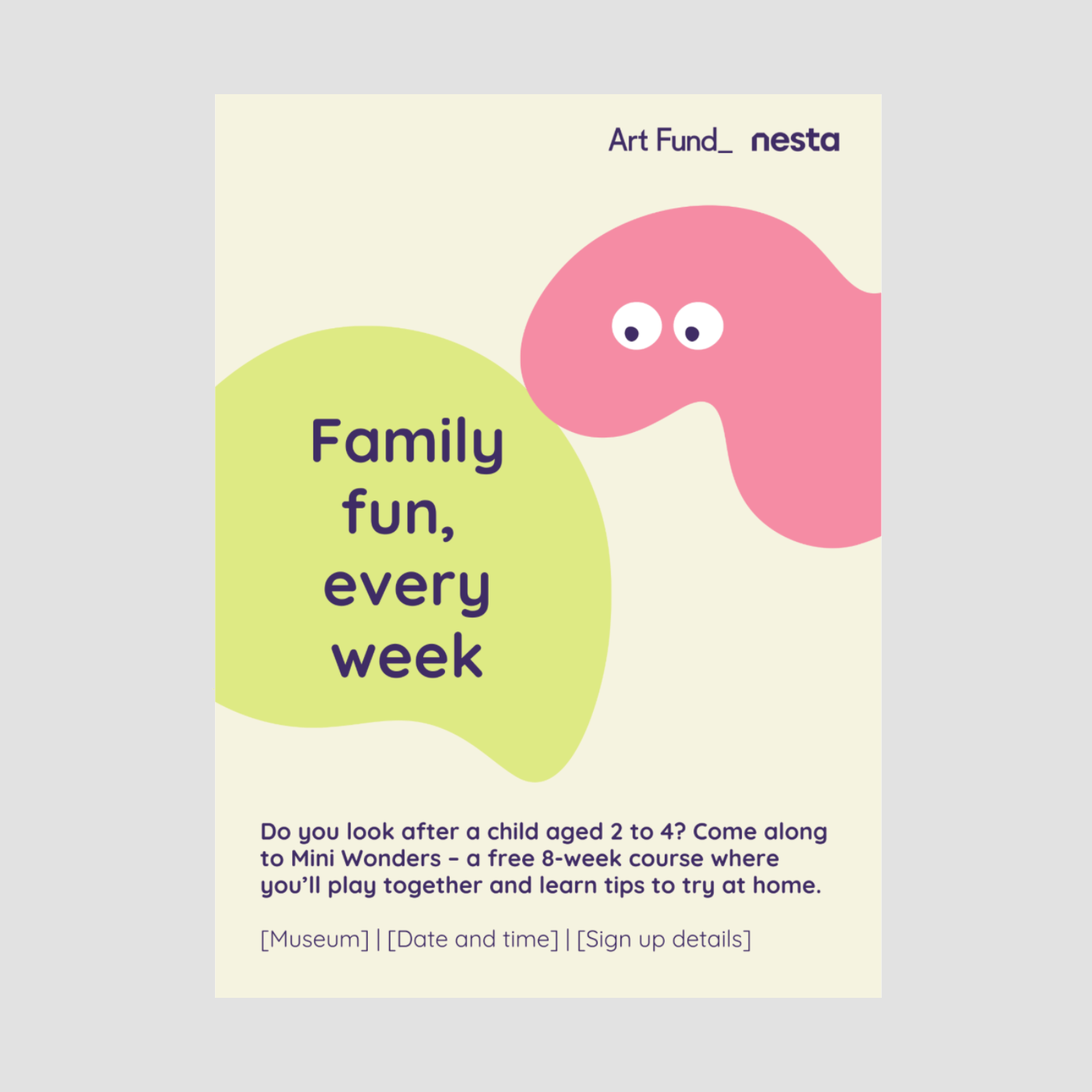
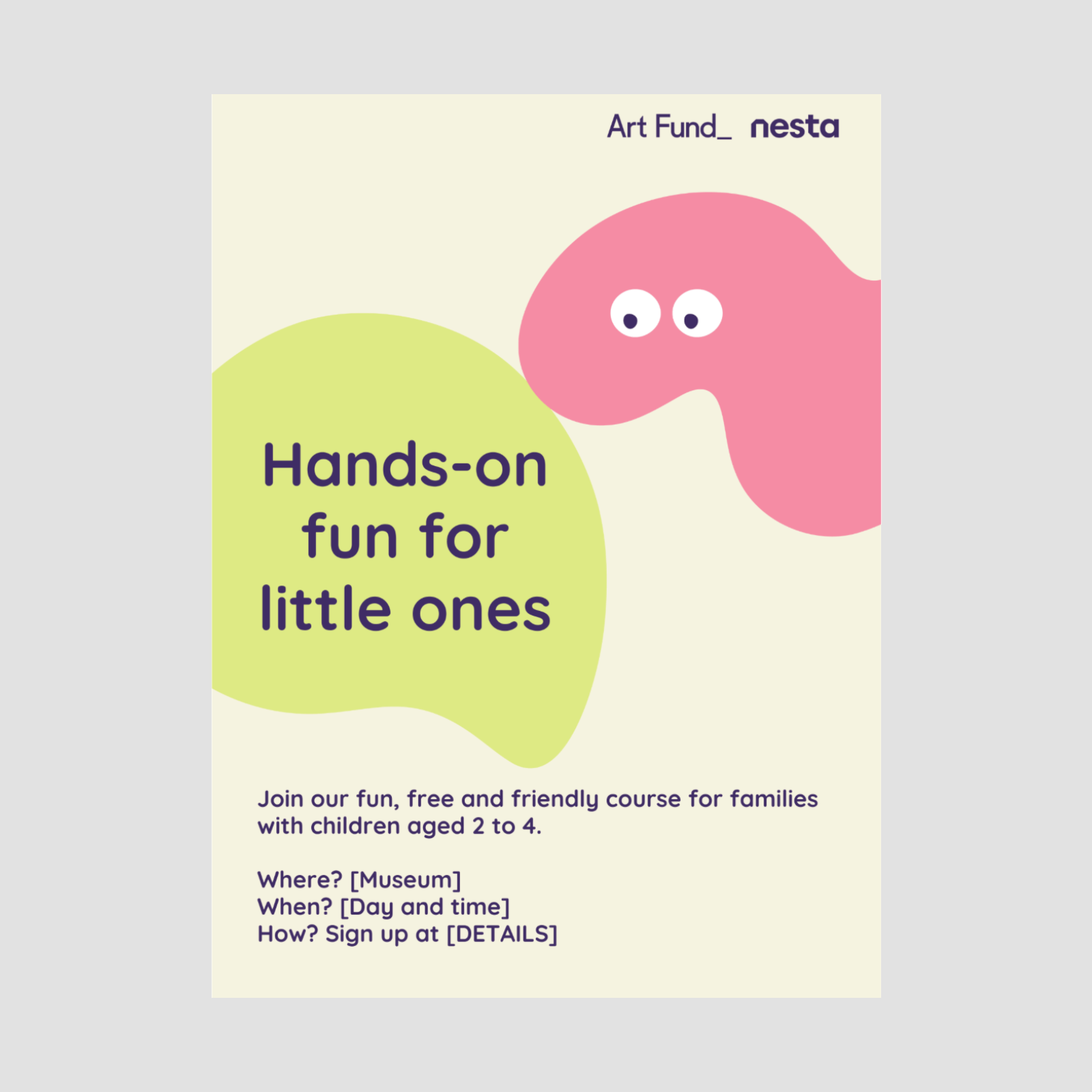
Print assets: developing templates for posters that participating museums can modify and use.
Copy editing: proofreading and editing professional-facing documents including the syllabus and evaluation report.
Examples
Narrative development and print assets
The core narrative was structured around ‘question words’, as these are some of the first words non-native speakers learn. The sentences were also kept short and straightforward, with bite-size paragraphs.
“Long version
Mini Wonders is a fun, free and friendly 8-week course for families with children aged 2 to 4.
What will I be doing?
You and your child will read stories, play games, sing songs, get creative and more. You will also discover useful tips to help your child learn at home.
Who will be there?
The groups are small and supportive. There will be a maximum of [12] pairs of children and adults.
Where and when is it?
We meet every [Wednesday] for 2 hours at the [Tate Modern]. The first session is on [1 January].
How do I sign up?
It’s easy! Just contact [CONTACT].”
Copy editing syllabus
“Making a day-to-day difference
Mini Wonders is designed to help embed new ideas and behaviours in families’ daily lives, not just in the sessions.
Each 2.5 hour session will help to foster warm and confident interactions between caregivers and children. They include plenty of opportunities for families to play and get creative, as well as time for the adults to chat, socialise and support one another.
The aim is to drive positive behaviour change for parents and caregivers by encouraging parents to discuss themes and Key Ideas, and to try things out in sessions and at home. They’re also encouraged to actively reflect on how the ideas, tips and strategies are working.
The sessions cover themes including:
Week 1: family life and what being a parent/caregiver is like
Week 2: feelings
Week 3: child-led play
Week 4: giving praise in descriptive ways
Week 5: encouragement and rewards
Week 6: routines
Week 7: tips for encouraging good behaviour
Week 8: listening
What does change look like?
A new behaviour for a parent/caregiver might be helping their child to identify and name their feelings out loud. Practising this in sessions and at home will help this behaviour to become a habit. Over time, this will help the child learn to express and deal with their own emotions, which will also help them in their relationships with others. Or a new idea from a session might be introducing choices into a child’s bedtime routine at home to help them build new skills and boost their confidence. “
